<HTML> <HEAD> <TITLE>Leonid MAC - The researchers. </TITLE> <Meta name="description"content="The participants in the Leonid Multi-Instrument Aircraft Campaign and their affiliations and bibliographies."><Meta name="keyword"content="leonids, leonid+storm, meteor+storm, leonid, meteors, astronomy, science, comet orbit, comet, comets,NASA NASA/Ames Research Center, Airborne Astronomy,meteoor, komeet, leoniden, uitbarsing, ILW, Watch, outdoor, travel, news, predictions, amateur, hobby, fireball, atmosphere "> </HEAD> <BODY BGCOLOR="#000000" LINK="#FFFFFF" VLINK="#0099FF" TEXT="#FFFFCC" ALINK="#CC0000" TOPMARGIN=0 LEFTMARGIN=0 MARGINWIDTH=0 MARGINHEIGHT=0> <P><BR></P> <A HREF="/cgi-bin/imagemap/leonid1"> <img src="c-3.jpg" alt="menu bar: storm - science - *researcher - images - ILW - news" align="bottom" WIDTH="700" HEIGHT="20" BORDER= "0" USEMAP="#leonid1" ISMAP></A> <P> <TABLE BORDER=0 CELLSPACING=0 CELLPADDING=0 WIDTH=700> <TR BGCOLOR="#000000" VALIGN=TOP ALIGN=RIGHT> <TD BGCOLOR="#000000"> <TABLE BORDER=0 CELLSPACING=0 CELLPADDING=0 WIDTH=110> <TR VALIGN=TOP ALIGN=LEFT WIDTH=110> <TD BGCOLOR="#000000"> <center> <P><img src="logo_3d.gif" alt="logo" align="bottom"> <H3>Leonid MAC </H3></font> </td> </tr> <td align=right><font size="4"><a href="./index.html" > home</a></font></td> </tr> <tr> <td align=right><font size="3"><a href="estimator.html" >View the shower </a></font></td> </tr> <tr> <td align=right><font size="3"><a href="logo.html" >Mission Brief </a></font></td> </tr> <tr> <td align=right><font size="3"><a href="why.html" >Science Update </a></font></td> </tr> <tr> <td align=right><font size="3"><a href="media.html" >Media Brief </a></font></td> </tr> <tr> <td align=right><a href="leonidlinks.html" >links</a></td> </tr> </TD> </TR> </TABLE>
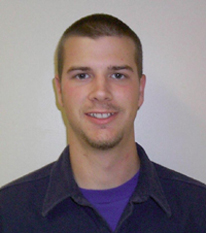
<P><BR></P> <HR> <img src="s-flagCanada.gif" alt="flag" align="left"> <FONT COLOR="#FFFFFF" SIZE="+3" FACE="Arial,Helvetica,Univers,Zurich BT"> Ian S. Murray, </FONT><BR><FONT COLOR="#FFFFFF" SIZE="+2" FACE="Arial,Helvetica,Univers,Zurich BT"> University of Regina, Canada.</font> <hr> <img src="s-murray.jpg" alt="portrait" align="center"> <P>Last updated: October 2002 <BR>E-mail: murray1 [at] uregina.ca
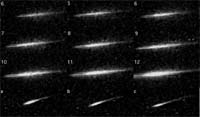
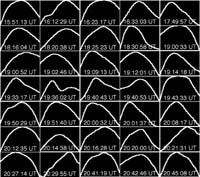
Homepage <P> <font color="#FF3300">Brief Biographical Information:</font> <P> Graduate student at the University of Regina (Department of Physics), in the heart of the Canadian prairies. My work (a study of the physical structure of meteoroids) is being completed under the watchful eye of my supervisor Prof. Dr. Martin Beech also in collaborations with Dr. Robert Hawkes at Mount Allison University.Born and raised in Moncton, New Brunswick on the East coast of Canada. Looking forward to participating in my third MAC, it was a wonderful and enriching experience in previous years. <P> <font color="#FF3300">Research Interests:</font> <P> <UL> <LI>Physical Structure of Meteoroids</LI> <LI>Lunar Impacts</LI> <LI>VLF Detection of Fireballs </LI> <LI>Flickering Events in the Peekskill Fireball</LI> <LI>Unusual Phenomena</LI> </UL> <font color="#FF3300">Research on Leonid MAC:</font> <P> Light Curves <P> <font color="#FF3300">Related studies of the leonids in November 1998</font> <P> We have used dual coaxial microchannel plate image intensified monochrome CCD detectors run at standard NTSC frame rates (30 fps) to study the Leonid meteor shower on Nov. 17, 1998 from an airborne platform at an altitude of about 13 km. The observing systems had fields of view (width) of 16.3ÿý and 9.5ÿý, and limiting stellar sensitivities of +8.3m and +8.9 m. Over 12 hours of recording 230 meteors were detected, of which 65 were Leonid meteors. <P> <img src="s-murrayimage.jpg" alt="meteor images"> <P> Light curves are presented for 53 of these meteors. The magnitudes at peak brightness of the meteors investigated were generally in the range from +4.0m to + 6.0m. The mass distribution indicies for the two samples are 1.67 and 1.44, with the former being based on the wider field of view dataset. The light curves were skewed with the brightest point towards the beginning of the meteor trail. The F parameter for points one magnitude below maximum luminosity had a mean value of 0.47 for the wider field system and 0.37 for the more sensitive narrower field system. We provide leading and trailing edge light curve slopes for each meteor as another indication of light curve shape. There were few flares obvious on the light curves, indicating that in-flight fragmentation into large number of grains is not common. <P> <img src="s-murraylightcurves.jpg" alt="meteor lightcurves"> <P> There is variability in light curve shape from meteor to meteor. The light curves are inconsistent with single, compact body meteor theory, and we interpret the data as indicative of a two component dustball model with metal or silicate grains bonded by a lower boiling point, possibly organic, substance. The variation in light curve shape is due to differences in mass distribution of the constituent grains. We provide trail length versus magnitude data. There is only a slight hint of a bend in the data representing the difference between meteors which have broken into a cluster of grains prior to grain ablation, and those which continue to fragment during the grain ablation phase. Several specific meteors show interesting light curve features. One meteor is nebulous in appearance, with significant transverse width. The apparent light production region extends for 450 m from the centre of the meteor path. Another meteor has several main fragments, and evidence of significant separated fragments. <P> In the 1999 Leonid MAC, we discovered that the lightcurves tended to differ from those in the 1998 campaign, suggesting that meteoroids fragmented differently. More about this published work can be found <a href="./leonidnews12.html">here</a>. In future missions, we will continue to study the morphological changes as a function of different positions in the comet dust trails and as a function of age since ejection. <P> </TD> </TR> </TR> </TABLE> <P><BR></P> </TD> </TR> <TR VALIGN=TOP ALIGN=LEFT> <TD WIDTH=540 COLSPAN=3><P ALIGN=CENTER><FONT SIZE="-2" FACE="Arial,Helvetica,Univers,Zurich BT">&nbsp;<BR></FONT><A HREF="#Top"><FONT SIZE="-2" FACE="Arial,Helvetica,Univers,Zurich BT">Top of Page</FONT></A><FONT SIZE="-2" FACE="Arial,Helvetica,Univers,Zurich BT"> - </FONT><A HREF="./media-guidelines.html"><FONT SIZE="-2" FACE="Arial,Helvetica,Univers,Zurich BT">Text/Image Use Guidelines</FONT></A> </TD> </TR> </TABLE> </TD> <!-------------------------------------------------------------------------------------------------> </TR> </TABLE> </TD> </TR> </TABLE> <TABLE background="bkgd-1.gif" width="1000" border="0" cellspacing="0" cellpadding="0" align="left" TOPMARGIN=0 LEFTMARGIN=0 MARGINWIDTH=0 MARGINHEIGHT=0> <tr > <TD> <BR> </TD> <TD widht=500 ALIGN=LEFT VALIGN=TOP> <IMG ID="Picture164" HEIGHT=115 WIDTH=500 SRC="bkgd-plane.gif" BORDER=0 align=left> </TD > <td height=150> </td> </TR> </TABLE> </TD> </TR> </TABLE> </TABLE> <MAP Name="leonid1"> <AREA Shape="Rect" coords = "1,1,121,20" HREF="./why.html" alt="Science Update"> <AREA Shape="Rect" coords = "122,1,225,20" HREF="./why.html" alt="Storm"> <AREA Shape="Rect" coords = "226,1,323,20" HREF="./what.html" alt="Science"> <AREA Shape="Rect" coords = "324,1,417,20" HREF="./the_scientists.html" alt="Researcher"> <AREA Shape="Rect" coords = "418,1,512,20" HREF="./98images.html" alt="Images"> <AREA Shape="Rect" coords = "513,1,597,20" HREF="./watch.html" alt="ILW"> <AREA Shape="Rect" coords = "598,1,700,20" HREF="./leonidnews.html" alt="News"> </MAP> </BODY> </HTML>